How to Read Labels if Your Diabetic
Understanding nutrient labels fact sheet
 This fact canvas is available in two formats.
You tin download and print out the PDF version.
Or yous can read it as a website folio below.
Labels on packaged foods provide information that tin aid yous make healthier food choices.
Understanding how to read nutrient labels tin assistance you cull foods with less saturated fat, table salt (sodium) and kilojoules, and with more fibre. They tin can besides provide information on the amount of carbohydrate in the food yous eat, to aid manage your blood glucose levels.
Information on food labels must encounter Australian nutrient labelling laws. Labels must:
- be written in English
- be clearly presented
- show the 'utilise by' or 'best before' date
- include an ingredients list
- include a nutrition information console
- clearly place food allergens and additives.
Nutrition information on food labels
When shopping for healthier foods, the two near useful tools on a food package are the nutrition information console and the ingredients list.
Nutrition information panel
You volition find a nutrition information panel on most packaged foods, equally it is compulsory for manufacturers to include. This console provides useful information to aid you compare similar products and cull healthier options for yous.
Here is an instance of a nutrition information panel.
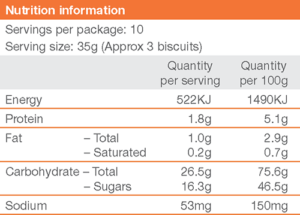
When yous read the diet data panel, bank check the serving size, the quantity per 100g column, the corporeality of energy (kilojoules), and the amount of fat, carbohydrate and sodium in the product. These components are explained here.
Serving size
This is the average serving size of the production, according to the manufacturer, which can help you work out the diet information for the serve you eat. Cheque whether your serving size is the aforementioned as the recommended serving size. If your serve is smaller or larger, y'all volition need to take this into account. A dietitian can assistance you with this.
Energy
Energy is measured in kilojoules (kJ) or calories (cal). The corporeality of free energy each of u.s. needs depends on many factors and will vary from person to person. When comparing like products, choosing those with fewer kilojoules can help with weight loss.
Fatty
'Total fat' includes all polyunsaturated, monounsaturated, saturated and trans fats in the food. It's important to consider both the corporeality and the type of fat.
Check the 'saturated fat' amount on similar products and cull the one with the least amount of saturated fat per 100g.
'Trans fats' are not required by law to be listed on the nutrition information panel but some manufacturers will list trans fats. Look for products with less than 1g of trans fats per 100 grams, peculiarly when buying margarines or baked goods.
Carbohydrate
'Total saccharide' includes both the sugars and the starches in food. This figure is useful if you count carbohydrates to assistance manage your blood glucose levels. To work out the amount of carbohydrate in food use the per serve column or the per 100g column. Y'all may need to accommodate this to adjust your serving size.
The 'sugars' amount tells you how much of the total carbohydrate is made upwards of sugars. It includes, both added sugars and natural sugars such as lactose in milk and fructose in fruit.
Remember, the total sugar affects blood glucose levels, not only saccharide.
A dietitian can aid you piece of work out how much carbohydrate you demand each day.
Sodium
This figure tells yous how much salt (sodium) is in the food. Where possible, cull products with 'reduced' or 'no added' salt. A low-table salt food has less than 120mg of sodium per 100g. When comparing similar products, choose the i with the lowest sodium per 100g.
Per centum (%) daily intake
Some manufacturers may choose to include information virtually percentage (%) daily intake. This can be used to compare the nutrients in one serve of the food with what an 'average adult' needs. This is merely a guide, as your daily intake may be higher or lower depending on your free energy needs.
Tips on making healthy food choices
To decide whether a nutrient is a healthy option, compare products and inquire yourself these questions:
Is the nutrient an 'everyday' or a 'sometimes' food?
- Fill your shopping trolley with a diverseness of 'everyday' healthy foods, such every bit fruit, vegetables, wholegrains, legumes, lean meats and poultry, fish or seafood, nuts, seeds and low-fat dairy. Reduce the corporeality of 'sometimes' foods like chocolate, crisps, sweet biscuits and soft drinks.
Is the food lower in saturated fatty?
- Compare similar products and cull those with the to the lowest degree amount of saturated fat per 100g.
Is the food lower in sodium?
- Healthier options have less than 120mg of sodium per 100g. Where possible, cull products that have 'reduced salt' or 'no added salt'.
Is the food high in fibre?
- Not all labels show the fibre content, just loftier fibre foods have at least more than 3g of dietary fibre per 100g. When comparing like products, choose the i college in fibre per 100g. This is particularly of import for foods like breads and cereals. It is recommended that adults aim for at least 25–30g of fibre each mean solar day.
Ingredients list
All packaged foods must have an ingredients listing on their labels. All ingredients are listed in descending order by weight (that is, the ingredient that weighs the most is listed first, and the ingredient that weighs the least is listed terminal).
You can utilize this data to help you lot determine whether the product is a good for you selection. For example, you can look at the ingredients list to notice out whether the sugar in the product is from an added or a natural sugar.
Nutrition claims
Food manufacturers frequently use diet claims on their packaging to attract the shopper'south attending. While the claim may be true, it may also be misleading—so information technology's useful to know the significant of nutrition claims. Always check the nutrition information panel to see if the product is a good for you option.
Here are some common claims and what they mean.
High fibre
The food must incorporate at least 3g of fibre per average serving.
Reduced salt
The product contains at least 25% less salt than the regular product. However, the reduced salt version may still have a loftier salt content, and so ever check the diet information panel and compare similar products.
No added salt
Salt has not been added.
Low table salt
The nutrient has less than 120mg of sodium per 100g.
Low joule or diet
The production is normally artificially sweetened and/or low fat. You lot tin check this in the ingredient listing or nutrition panel.
No added sugar
The product contains no added sugars (such as sucrose, honey or glucose). Yet, the product may notwithstanding comprise natural sugars, such every bit milk (lactose), fruit (fructose) or other carbohydrates, which can affect your claret glucose levels.
Depression fat or 97% fat free
The nutrient must contain no more than 3g of fat per 100g of nutrient, or no more than than 1.5g fat per 100mL of liquid.
Reduced fat
The product contains at least 25% less fatty than the regular product. Nonetheless, this doesn't necessarily hateful information technology's depression in fat.
Lite or lite
This may refer to a reduced fat content, but it may also be used to describe taste, texture or color. For case, calorie-free olive oil is lighter in colour and sense of taste simply not lower in fat. Bank check for an explanation on the label and compare fat content per 100g with like products.
Nutrition claims on food products
If a product includes a nutrition claim about a specific nutrient on the package, it must list the amount in the nutrition data panel. For example, if it makes a claim about dietary fibre, the amount of fibre must exist listed in the panel.
Nutrition symbols
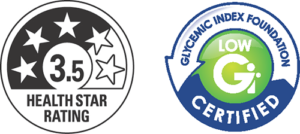
Food manufacturers can choose to brandish nutrition symbols such as the GI symbol and the Wellness Star Rating system.
These symbols show that the product has been tested and meets specific criteria, merely it is even so a good thought to bank check the nutrition information panel to make sure the product meets your needs.
More than information
For more information virtually understanding nutrient labels, visit: foodstandards.gov.au.
The Healthy shopping guide–your essential supermarket companion can help you brand healthy food choices. To purchase a re-create, phone call 1800 637 700.
The NDSS and yous
A broad range of services and support is available through the NDSS to assist yous manage your diabetes. This includes information on diabetes management through the NDSS Helpline and website. The products, services and education programs available tin can help yous stay on elevation of your diabetes.
This information is intended as a guide but. It should not replace individual medical advice. If you lot have any concerns almost your health, or further questions, you should contact your health professional.
Version 3 February 2020. First published June 2016.
Source: https://www.ndss.com.au/about-diabetes/resources/find-a-resource/understanding-food-labels-fact-sheet/
0 Response to "How to Read Labels if Your Diabetic"
Post a Comment